
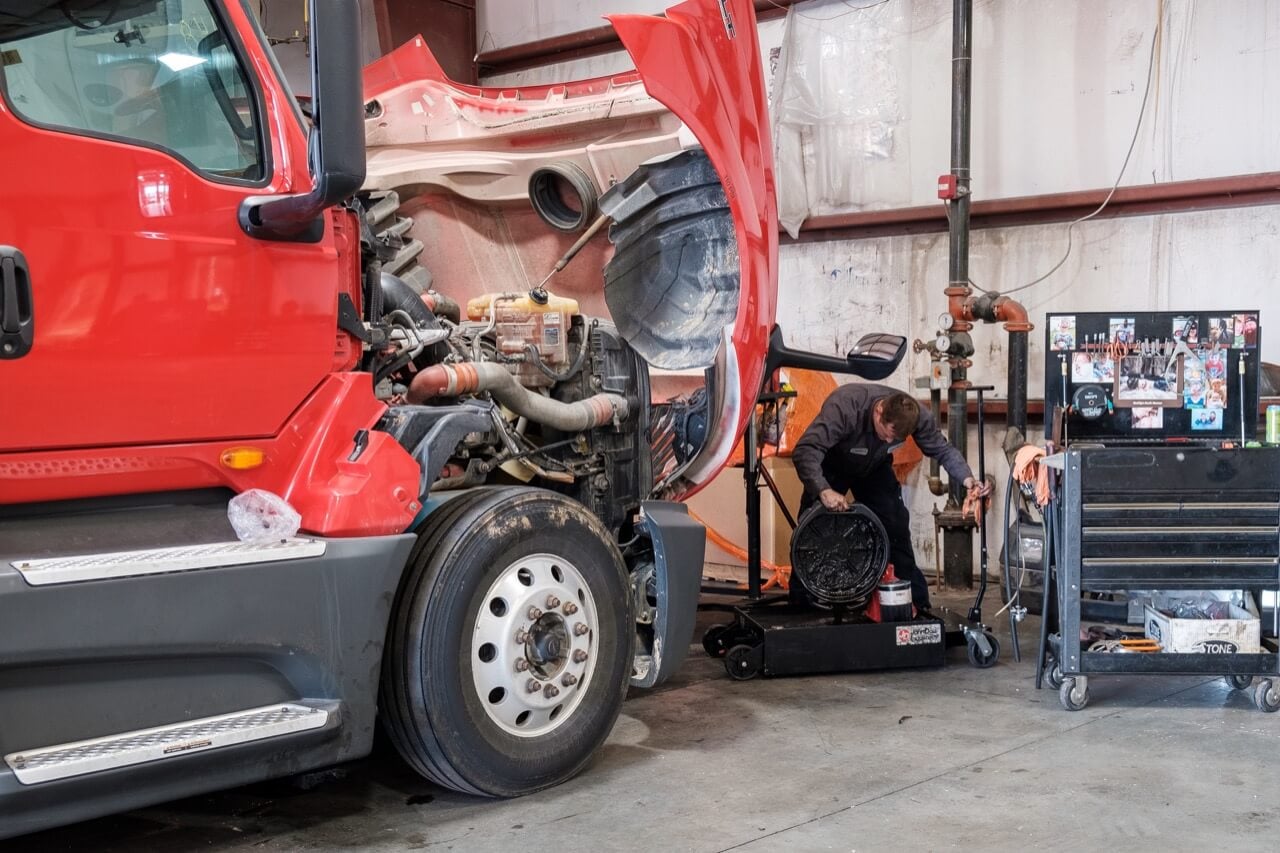
The right oil change interval for a heavy-duty truck comes from three things: the engine maker's recommendation for that engine, the oil you run, and how hard the truck works. A tractor running steady interstate miles and a dump truck idling on a job site can have the same engine and need very different intervals. A fleet-wide number is easy to manage, but it either wastes oil on some trucks or shortens engine life on others.
Start with the engine maker's schedule
Every engine maker publishes oil change intervals in its operation and maintenance manual, usually as a table that changes with duty cycle. Most split trucks into categories such as light, normal and severe duty, based on things like fuel economy, idle time, load and route. A truck that idles a lot, makes many short trips or burns more fuel per mile usually falls into a shorter interval.
Start with the manual for the exact engine model and year, put each truck in the right duty category, and set the interval from there. If a truck changes jobs, from highway to local delivery for example, its interval should change with it.
Use the right oil category
Diesel oils carry a service category in the API symbol on the container. The American Petroleum Institute's Engine Oil Licensing and Certification System licenses oils that meet categories whose performance requirements are set with vehicle and engine manufacturers, including the Truck and Engine Manufacturers Association. For current on-highway diesels, the categories are CK-4 and FA-4. FA-4 is a lower-viscosity oil meant only for engines whose maker approves it, so check the manual before using it.
The category matters beyond the engine itself. Oil that burns in the cylinders leaves ash behind, and a Cummins technical support director told Overdrive that ash collected in the diesel particulate filter comes mainly from additives in the oil (Overdrive). Running the right oil, and keeping oil consumption down, protects the DPF as well as the engine. We cover that link in our post on DPF and EGR problems.
Let oil analysis confirm or adjust the interval
Oil analysis is the most reliable way to know whether an interval is right for a particular truck. A small sample taken at the oil change goes to a lab, which reports on:
- Wear metals, such as iron, copper and lead, which show which internal parts are wearing and how fast.
- Coolant, which can mean a leaking oil cooler, head gasket or EGR cooler.
- Fuel dilution, which can point to injector problems.
- Soot and viscosity, which show whether the oil is still doing its job when it is drained.
- Dirt, which can mean an air intake leak or a filter problem.
Fleets that want to extend intervals should only do it with analysis backing the decision, and within what the engine maker allows. The same samples catch problems early. A rising coolant reading, for example, is a warning that something is leaking before the engine is damaged.
What low or leaking oil does
Heavy-duty trucks are oil-driven machines. Oil lubricates, cools and cleans most of the engine's moving parts. Oil that burns too fast or leaks can end up in the engine's cylinders, which can leave pistons oil-drenched and cause them to seize or stick. Low oil is one of the fastest routes to serious engine damage.
That is why checking oil level between changes matters as much as the change itself. Watch for:
- Oil level dropping between changes.
- Oil on the ground under the truck, or on the engine.
- Blue-gray exhaust smoke, which can mean the engine is burning oil.
- A drop in transmission, brake or power steering fluid on a routine check.
What a full oil and fluid service should include
An oil change is the center of the visit, but a good service looks at every fluid on the truck. At our shops, an oil and fluid service can include:
- Oil and oil filter replacement, so clean oil keeps moving through the engine.
- Transmission fluid and brake fluid checks.
- Differential servicing and power steering fluid service.
- Oil cooler line flushing.
- Pan gasket replacement, oil pump repair or oil separator replacement when the inspection calls for it.
- Washer fluid top-ups.
An oil change itself takes 15 to 45 minutes, and most oil and fluid visits are turned around the same day. If a truck has been using the wrong viscosity, correcting it can take up to two hours.
Build the interval into the PM schedule
The simplest way to keep intervals on track is to tie them to the rest of preventive maintenance: oil service at the interval, with a brake check, tire check and walk-around inspection at the same visit. That way, one trip to the shop covers several items and the truck is back to work quickly. Our post on scheduling fleet preventive maintenance covers how to set those triggers by mileage, engine hours or inspection.
Schedule an oil and fluid service
Statesville: 704-960-8951. Bessemer City (serving Gastonia and Gaston County): 980-391-4100. Monroe: 980-396-6750. You can also email marketing@gallaherfleetsolutions.com or request service at www.gallaherfleetsolutions.com/contact, and we will get back to you the same business day. See oil and fluid service for the full list of services.