.jpg)
What Does a $1,000 Truck Repair Really Cost Your Fleet? Understanding Downtime
A $1,000 truck repair may seem like a manageable maintenance expense, until you calculate what that repair really costs your fleet. The invoice from the repair shop is only one part of the equation. When a commercial truck is down, your business can also lose productivity, driver time, revenue, customer trust, and valuable opportunities.
For fleet owners and managers, the real goal isn't simply to find the cheapest repair. It's to minimize total downtime and keep trucks productive and road-ready.
The Repair Bill Is Only the Beginning
Imagine one of your trucks needs a $1,000 repair and is unavailable for a full day. The actual cost to your business could include:
- Lost productivity: The truck isn't generating revenue while it's sitting in the shop.
- Driver wages: You may still be paying the driver even when the truck isn't operating.
- Towing and roadside expenses: A breakdown away from your facility can add towing and emergency service costs.
- Missed deliveries: A delayed truck can mean missed appointments, delayed jobs, or incomplete routes.
- Rental equipment: You may need to rent another truck or equipment to keep operations moving.
- Overtime: Employees may need to work additional hours to make up for lost production.
- Customer impact: Delays can affect customer satisfaction and potentially future business.
The Bureau of Labor Statistics reports that heavy and tractor-trailer truck drivers had a median annual wage of $58,640 in May 2025, demonstrating that labor remains a significant operating expense even when a vehicle is unavailable.
Downtime Can Cost More Than the Repair
Consider a simple example. A $1,000 repair takes one day to complete. If that truck normally generates $1,500 in daily revenue, you could potentially lose $1,500 in productivity before accounting for driver wages, towing, rental equipment, overtime, or customer-related costs.
Suddenly, a $1,000 repair isn't necessarily a $1,000 problem.
This is why fleet maintenance should be viewed as a business strategy, not simply an expense.
Preventive Maintenance Helps Control the Real Cost
One of the best ways to reduce unexpected downtime is through a structured preventive maintenance program. Regular inspections can help identify worn components, fluid issues, brake problems, electrical concerns, and other developing failures before they become major breakdowns.
The Federal Motor Carrier Safety Administration (FMCSA) requires motor carriers to systematically inspect, repair, and maintain commercial vehicles. FMCSA also notes that maintenance intervals should be appropriate for the specific fleet and vehicles.
For fleet managers, that means maintenance should be planned around factors such as mileage, engine hours, vehicle application, manufacturer recommendations, and operating conditions.
Think in Terms of Total Cost of Ownership
When evaluating a repair, don't ask only, "How much will this repair cost?"
Ask: "What will it cost my business if this truck isn't working?"
That shift in perspective can help you prioritize preventive maintenance, schedule repairs before failures occur, and choose a repair partner capable of responding quickly when unexpected problems happen.
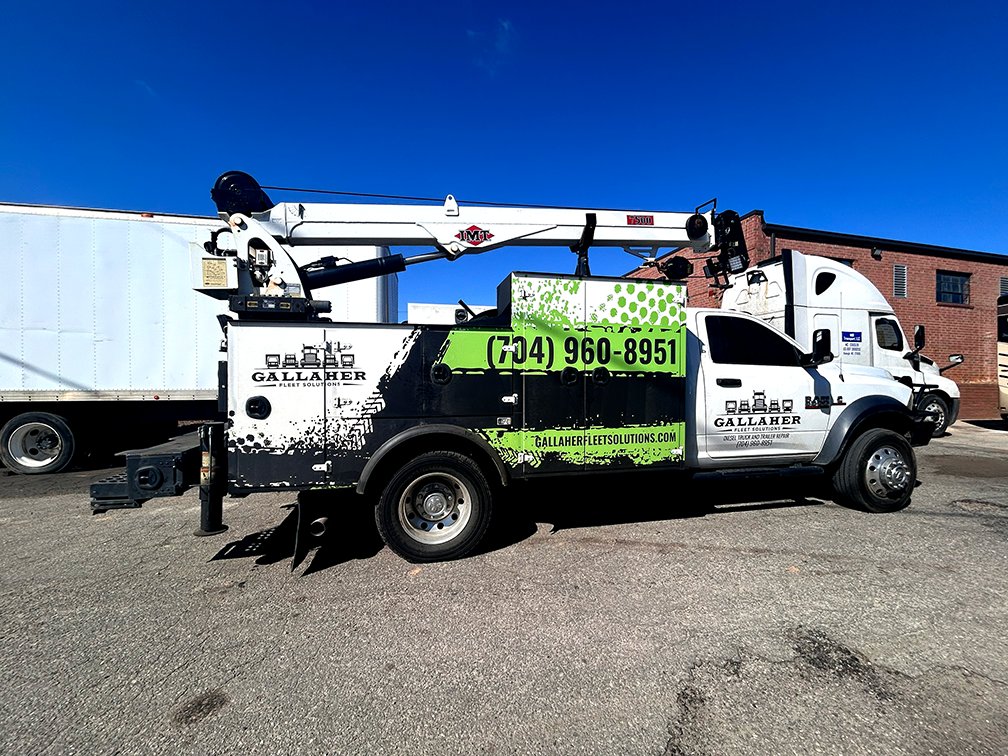
At Gallaher Fleet Solutions, we help fleets keep trucks moving with preventive maintenance, diagnostics, repairs, DOT inspections, and mobile diesel service. Our goal isn't just to repair the truck, it's to help reduce downtime and protect your fleet's productivity.
Don't let a $1,000 repair become a $5,000 downtime problem. Contact Gallaher Fleet Solutions today to build a maintenance strategy designed to keep your fleet on the road.
.webp)
.jpg)
.jpg)
.jpg)